
What Is the CHL HEDIS Measure? A Complete Guide for Health Plans

Alexis Tilburg
November 11, 2026
•
5 min read
Chlamydia is one of the easiest infections to find with a test and one of the easiest to miss without one. Most women who have it never notice a symptom and the people most likely to be infected are young adults who rarely book a preventive visit. For a lot of health plans, that combination has kept chlamydia screening rates stuck in the same range for years.

The Chlamydia Screening (CHL) HEDIS measure tracks how many members ages 16 to 24 who are recommended for routine screening and identified as sexually active had at least one chlamydia test during the year. Below, we cover what the measure requires, where it counts, why rates have stalled, and how at-home testing helps plans reach the members who aren't coming in.

What Does the CHL HEDIS Measure Require?

HEDIS is the set of quality measures health plans report to NCQA. NCQA defines the CHL measure as the percentage of members 16 to 24 who were recommended for routine chlamydia screening, were identified as sexually active, and had at least one chlamydia test during the measurement year.

For years, the measure was called Chlamydia Screening in Women. NCQA has since updated the language to cover members recommended for routine screening, which keeps it aligned with USPSTF guidance and with guidance on care for transgender and gender-diverse people.

A few details shape how plans manage it day to day:

  • Two age bands. Plans report rates for members 16 to 20 and 21 to 24, plus a combined total.
  • Sexual activity comes from your data. Members land in the denominator through claims and pharmacy events like contraceptive prescriptions, pregnancy tests, and diagnoses or procedures that indicate sexual activity.
  • One test closes the gap. A single qualifying chlamydia test in the measurement year counts toward the numerator.
  • Supplemental data counts. CHL is an administrative measure, and plans can submit lab results that never show up on a claim.
  • Exclusions are limited. Members in hospice, members who died during the year, and members whose sex assigned at birth is male are excluded.

Where CHL Counts in Quality Programs

CHL applies to commercial, Exchange and Medicaid plans. It feeds into NCQA Health Plan Ratings and the CMS Quality Rating System for Marketplace plans, and the 21-to-24 band appears in the CMS Medicaid Adult Core Set as CHL-AD. It isn't part of Medicare Advantage Star Ratings, which makes sense given the age range.

For plans with large Medicaid or Marketplace books, CHL is an odd measure to manage. The eligible members are young and mostly healthy, and plenty of them haven't seen a primary care provider in years. Provider-led outreach alone rarely reaches them, which is why CHL can be one of the most frustrating lines on a plan's gap closure list even though the test itself is simple.

Chlamydia Screening, by the Numbers

  • CDC counted 1,515,985 reported chlamydia cases in 2024, including 943,890 among women. That's provisional data, and it's an 8% drop from 2023, the second straight annual decline.
  • Reported cases only include people who got tested. CDC estimates about 4 million chlamydial infections occurred in 2018, and two-thirds of new infections happen among people 15 to 24.
  • Only about 5% to 30% of women with a confirmed infection develop symptoms.
  • Left untreated, chlamydia leads to pelvic inflammatory disease in roughly 10% to 15% of women, which can cause chronic pelvic pain, infertility and ectopic pregnancy.
  • In 2024, 53.7% of sexually active females 16 to 24 in Medicaid and commercial plans were screened. That's slightly below the 2018 baseline of 54.9% and well short of the Healthy People 2030 target of 76.5%.
  • Commercial plans have historically trailed Medicaid. In 2020, national CHL rates were 57.9% for Medicaid and 48.4% for commercial plans.

Fewer reported cases is good news. With screening rates flat, though, it's hard to say how much of that decline reflects less infection and how much reflects fewer tests.

Why Young Members Fall Through the Gap

The members in the CHL denominator are busy, mostly healthy, and often between doctors. When they do get care, it's frequently at urgent care or the ED for something else entirely. A 2026 study of more than 134,000 testing episodes in a Massachusetts health system found that Black, Hispanic and uninsured young women were much more likely to be tested in acute care settings than in primary care or OB-GYN offices. Uninsured women were more than twice as likely. They were also more likely to have symptoms by the time they were tested, which means screening happened late.

Privacy is the other barrier, and plans shouldn't underestimate it. A 22-year-old on a parent's commercial plan may know that a chlamydia test can show up on an explanation of benefits mailed home. For some, skipping the test feels easier than that conversation.

Then there's the visit itself. Screening depends on a clinician asking about sexual activity and ordering a test, often during a short appointment that was booked for a sore throat or a sports physical. The plan already knows who's in the denominator from pharmacy and claims data, the hard part is getting those members a test.

At-Home Chlamydia Testing: Meeting Members Where They Are

The USPSTF recommends chlamydia screening for all sexually active women 24 and younger (Grade B). CDC notes that nucleic acid amplification tests (NAATs) are the most sensitive option, vaginal swabs are the optimal specimen for women, and self-collected vaginal swabs perform as well as clinician-collected ones. In November 2023, the FDA granted marketing authorization to the first chlamydia and gonorrhea test with at-home sample collection for adults 18 and older.

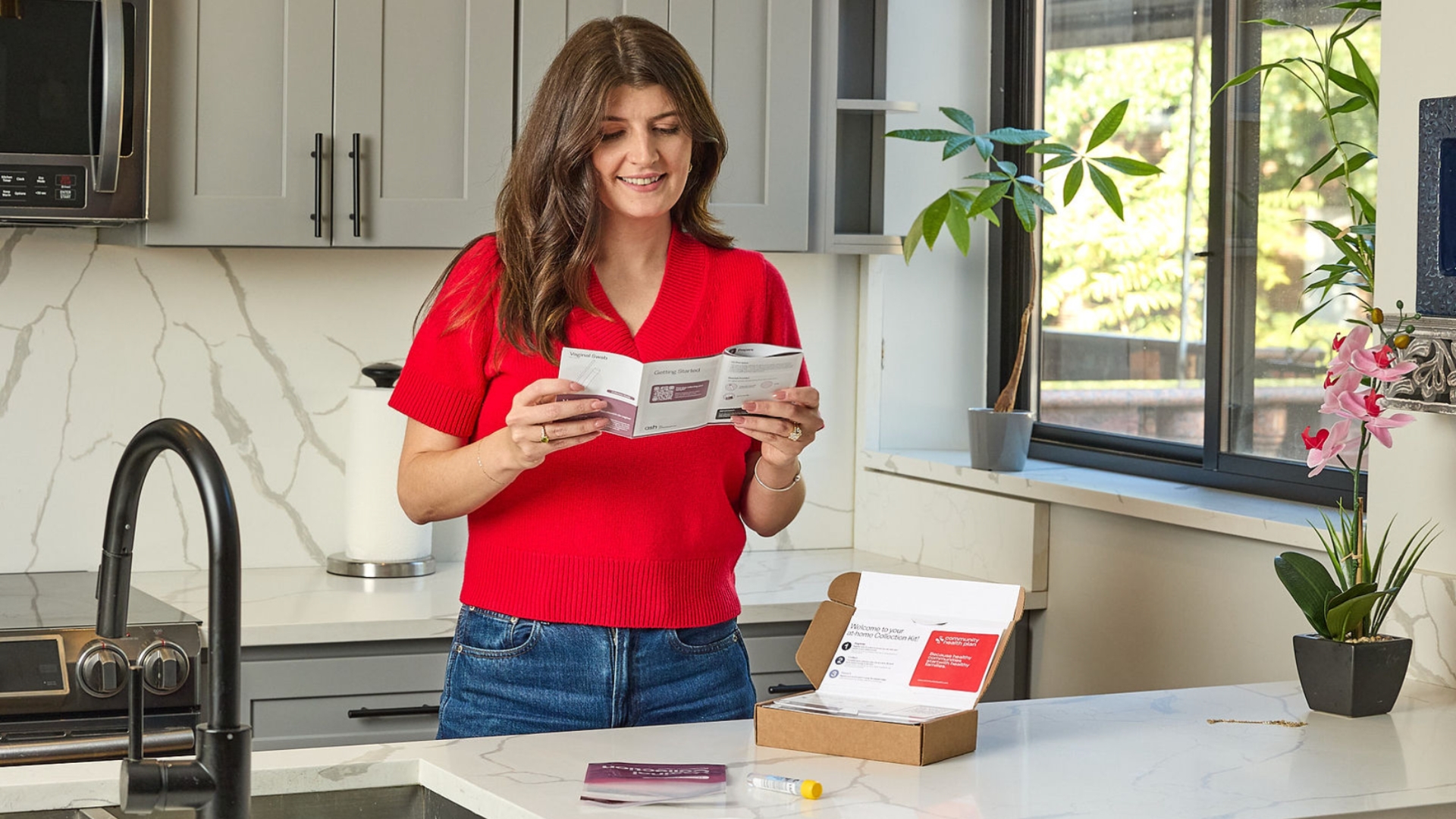
At-home testing takes the visit, the waiting room and the awkward question out of the process. A member collects a sample in private, mails it back with a prepaid label, and gets results directly. The sample goes through a lab like any other chlamydia test. As long as the result reaches your HEDIS data through claims or supplemental lab data, it can close the gap.

This is familiar ground for Ash. At inception, Ash was designed to increase access to STI screening for harder to reach members and have shipped thousands of STI tests to diverse populations. We’ve used these insights to build the platform health plans use today for infectious disease screening and other HEDIS measures. If you've read our guide to the CCS HEDIS measure, the pattern will look similar: self-collection reaches members who have already shown they won't come in.

One practical note: Ash's programs serve members 18 and older. That covers the full 21-to-24 band and most of the 16-to-20 band. Plans still need in-office screening for 16- and 17-year-olds, so it makes sense to pair kits with provider outreach for that group.

Building a Chlamydia Screening Program That Closes the Gap

CHL is an outreach problem first and a clinical problem second. Here's what that looks like in practice.

  • Start with the list you already have. Your denominator is built from pharmacy and claims data, so you know who needs a test before outreach starts.
  • Respect privacy in every message. Keep language neutral, send results directly to the member, and don't make anyone explain why they're testing.
  • Use the channels young members check. Text and email will reach a 20-year-old faster than a mailed letter. Members who receive Ash's multichannel outreach complete testing 2.4× more often than with single-channel methods, which means more closed gaps.
  • Plan for positive results. Every Ash kit is ordered and reviewed by a clinician, with clinicians on record to receive and act on abnormal results. Results can also be shared with the member's PCP so follow-up care doesn't stall.

If your plan wants to close more chlamydia screening gaps, Ash can help. Our gap closure programs bring at-home chlamydia testing to members 18 and older under your plan's brand, with multichannel engagement in English and Spanish, clinician oversight and real-time reporting. Talk to our team about building a program for your health plan.

‍

‍

CHL HEDIS Measure FAQs

What does CHL stand for in HEDIS? Chlamydia Screening. It measures the share of sexually active members 16 to 24 who had at least one chlamydia test during the measurement year.

What are the current chlamydia screening guidelines? The USPSTF and CDC both recommend screening all sexually active women under 25, with CDC recommending it every year.

Does an at-home chlamydia test count toward CHL? Yes, when it's a lab-processed chlamydia test and the result reaches your HEDIS data through claims or supplemental data.

Is CHL part of Medicare Advantage Star Ratings? No. CHL applies to commercial, Exchange and Medicaid plans and counts in NCQA Health Plan Ratings and the CMS Quality Rating System.

‍

Share this post
Alexis Tilburg
Alexis is a VP Marketing at Ash with a focus on product marketing and demand generation. An Indiana University alum, she combines her passion for developing brands with her ten plus years of healthcare experience to drive meaningful results. Passionate about health equity and the importance of preventive care, Alexis is dedicated to being a part of brands that make healthcare accessible for all.

References

  1. NCQA. HEDIS. https://www.ncqa.org/hedis/
  2. NCQA. Chlamydia Screening (CHL). https://ncqa.org/report-cards/health-plans/state-of-health-care-quality-report/measures-list/chlamydia-screening-chl
  3. Health Plan of Nevada. Chlamydia Screening (CHL) HEDIS Tip Sheet, 2026. https://www.healthplanofnevada.com/content/dam/hpnv-public-sites/health-plan-of-nevada/provider/hedis/womens-health/2026/Chlamydia%20Screening%20(CHL).pdf
  4. Medicaid.gov. 2024 Core Set of Adult Health Care Quality Measures for Medicaid. https://www.medicaid.gov/sites/default/files/2024-02/2024-adult-core-set.pdf
  5. Centers for Disease Control and Prevention. Sexually Transmitted Infections Surveillance, 2024 (Provisional). https://www.cdc.gov/sti-statistics/annual/index.html
  6. Centers for Disease Control and Prevention. CDC Releases 2024 National STI Data, 2025. https://www.cdc.gov/nchhstp/director-letters/release-2024-sti-data.html
  7. Centers for Disease Control and Prevention. Chlamydia: CDC Detailed Fact Sheet. https://www.cdc.gov/std/chlamydia/stdfact-chlamydia-detailed.htm
  8. Office of Disease Prevention and Health Promotion. Healthy People 2030, STI-01: Increase the proportion of sexually active female adolescents and young women who get screened for chlamydia. https://odphp.health.gov/healthypeople/objectives-and-data/browse-objectives/sexually-transmitted-infections/increase-proportion-sexually-active-female-adolescents-and-young-women-who-get-screened-chlamydia-sti-01/data
  9. He L, Patel C, Tao G. National Chlamydia Screening Rate in Young Sexually Active Women Using HEDIS Measures in the United States, 2011 to 2020. Sexually Transmitted Diseases, 2023. https://pmc.ncbi.nlm.nih.gov/articles/PMC10613457/
  10. Disparities in Screening and Test Positivity for Chlamydia and Gonorrhea Among Adolescent and Young Adult Women in a Massachusetts Integrated Healthcare System, 2016–2024. Open Forum Infectious Diseases, 2026. https://academic.oup.com/ofid/article/13/Supplement_1/ofaf695.208/8420204
  11. U.S. Preventive Services Task Force. Chlamydia and Gonorrhea: Screening, 2021. https://www.uspreventiveservicestaskforce.org/uspstf/recommendation/chlamydia-and-gonorrhea-screening
  12. U.S. Food and Drug Administration. FDA Grants Marketing Authorization of First Test for Chlamydia and Gonorrhea with At-Home Sample Collection, 2023. https://www.fda.gov/news-events/press-announcements/fda-grants-marketing-authorization-first-test-chlamydia-and-gonorrhea-home-sample-collection
  13. Ash. National Health Plan Case Study. https://campaign.poweredbyash.com/national-case-study

‍

Other Posts You Might Like

Health Plans

2027 Star Ratings: What Changed and What It Means for MA Plans

October 12, 2026
Health Plans

HEDIS MY 2027 Changes: What Health Plans Need to Know — and Where At-Home Testing Fits In

August 7, 2026
Health Plans

How At-Home Dried Spot Testing Is Making Diagnostics More Sustainable

July 22, 2026