March 24, 2026
•
5 min read
.jpg)
Colorectal cancer is a significant health concern and the second leading cause of cancer in America, yet it is also one of the most preventable and treatable conditions when caught early. The U.S. Preventive Services Task Force (USPSTF) recommends that adults at average risk begin colorectal cancer screening as early as age 45 with the HEDIS COL measure evaluating the percentage of members between 45-75 who have been screened.
However, for many members, the hurdle isn't a lack of will—it's a lack of convenience. Traditional invasive exams, including colonoscopies,can be intimidating, leading to significant gaps in care. With nearly 1 in 3 adults not screened as recommended, understanding the variety of screening modalities is the first step in closing care gaps and ensuring better health outcomes for all.
Before choosing a test, it is essential to determine if a person is at average risk. Most people fall into this category, but those with a family history of colorectal cancer, personal history of inflammatory bowel disease (like Crohn’s or ulcerative colitis), or certain genetic syndromes may need to start screening earlier.
For many, at-home testing solutions represent the most accessible path to screening. These tests look for signs of cancer, such as hidden blood or altered DNA, in the stool. One consideration for any noninvasive CRC screening is that any positive result must be followed by a timely colonoscopy to investigate the findings further.
The FIT test is a highly sensitive method that uses antibodies to detect blood in the stool from the lower intestines.
Why it works for plans: It is cost-effective and significantly increases completion rates among members who are adverse to invasive procedures. See how Ash helped one plan increase return rates by 2.4x.
This category includes well-known options like Cologuard. These tests look for both hidden blood and specific DNA mutations associated with cancer cells.
These exams allow doctors to look directly at the lining of the colon and rectum.
Often called the "gold standard," a colonoscopy involves a flexible tube with a camera that examines the entire colon.
A CT Colonography uses X-rays and computers to produce a 3D image of the colon.
Considerations: Like a traditional colonoscopy, this method requires intensive bowel prep and time off of work.
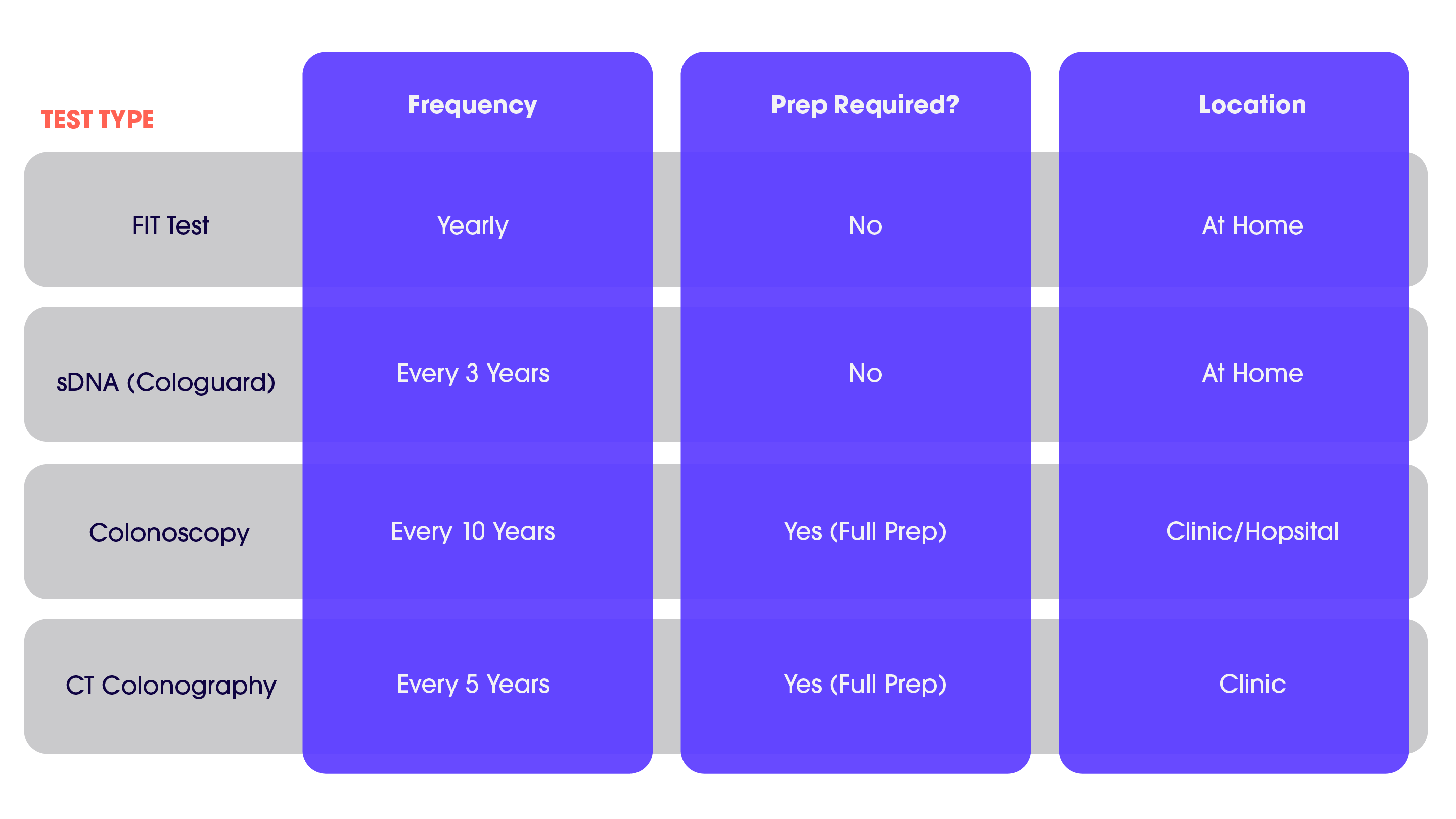
While there are many effective ways to screen for colorectal cancer, the best test is the one that actually gets completed. For health plans looking to improve HEDIS scores and meet the HEDIS measure for colorectal cancer screening, optionality is key.
Ash provides the infrastructure to launch seamless at-home health programs. Whether your strategy involves annual FIT testing or other stool-based modalities, our platform is device-agnostic and designed to fit your specific population's needs. We handle the kitting, logistics, and lab integrations so you can focus on member care.
To see how we helped one national health plan boost CRC screening rates, read our case study.
If you’d like to set up time to talk about how Ash can support your programs, we’d love to chat.