November 19, 2026
•
5 min read

When a health plan selects a care gap closure partner, it's also entrusting someone to hold its members' data. That decision usually runs through a security review long before anyone compares engagement rates.
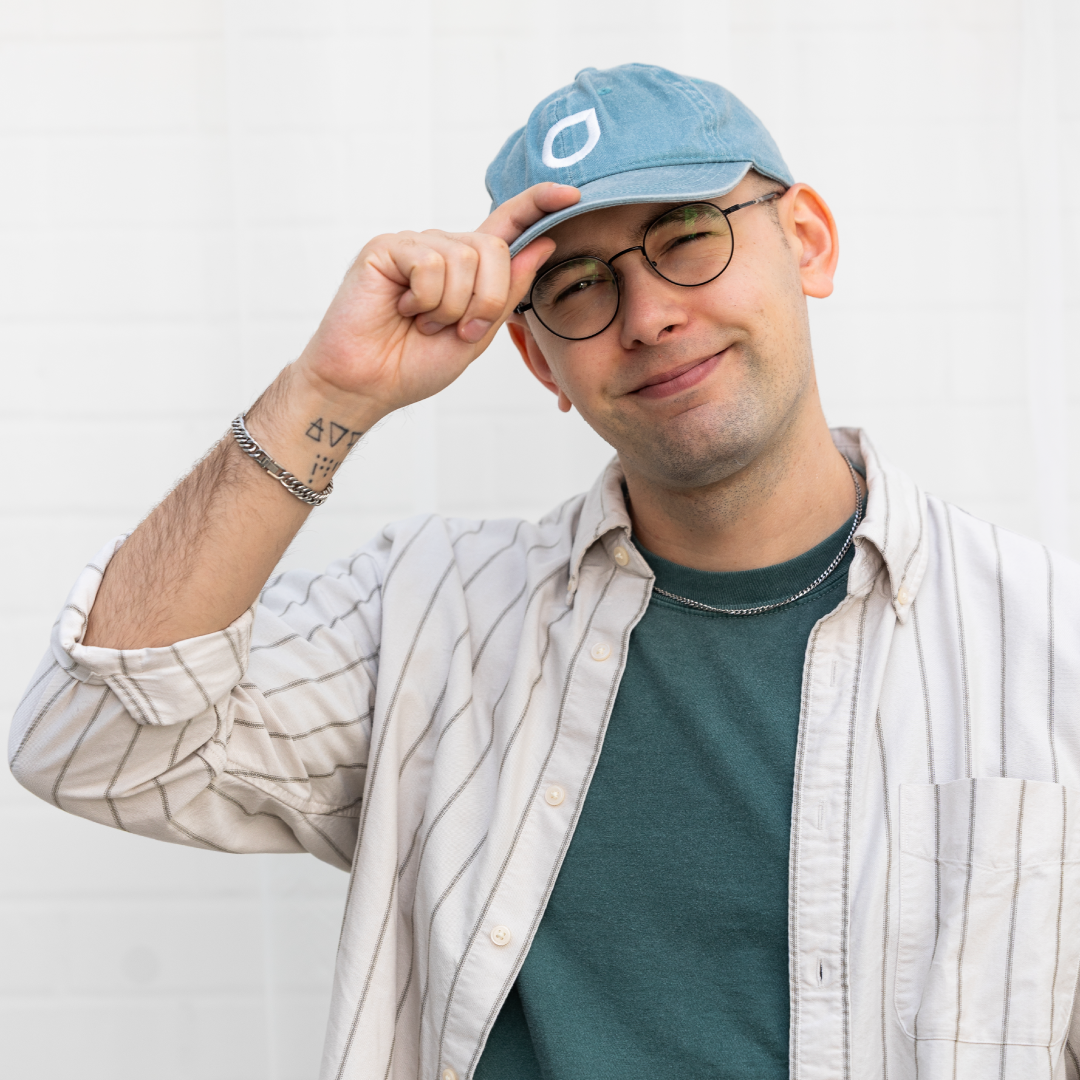
Isaac Sukin leads technical security at Ash, the at-home testing platform behind HEDIS gap closure programs for Medicare Advantage plans and digital health companies. He's built compliance programs from scratch, run security for a company serving defense tech, and now owns the systems that keep PHI security front and center at Ash.
We sat down with Isaac to talk about SOC 2 compliance, healthcare data security, how Ash uses AI to find vulnerabilities first, and what it takes to build a platform health plans can rely on. His answers have been lightly edited for length and clarity.
Early in my career, I did a lot of different things. I like building things, and I had a lot of curiosity. A lot of what I've done in my life, I did because it sounded cool and I didn't know how hard it would be. It's been pretty rewarding.
My path to VP has some foundation in Dorm Room Fund, where I got to see what startups look like from the investor side, and in my time at Acquia as a product manager. I'd been coding as a hobby for a long time. I'd probably done 10,000 hours by the time I graduated from college. But I didn't really think of it as a career at first, so I went into product management after school.
The engineering journey started at Instrumental, which does AI for manufacturing. I joined as the second employee and moved across the country from Boston to the Bay Area. They'd talked to me about doing product management, but the team was too small, so I started as an engineer running the web side of things.
We grew the company to 80-something people and raised through Series C. I was there seven and a half years. I became a manager, then a director. I ran web engineering and security, at various times product management, and even marketing for three months. I was part of figuring out product-market fit, building processes, and growing the team while keeping a vibrant culture.
From there, I went to the company that turned into Puntt, which was called Meaningful Gigs. The previous CTO, one of the founders, had left. So I was stepping into that leadership role as VP of Engineering and acting as the go-between for a CEO who wasn't technical and an engineering team that had gone a stretch without a leader. We built an AI product for marketing compliance from scratch, closed some big customers, and built something that solves a real problem.
I go into that depth mainly to say that in this picture of how I became a VP, there have been a lot of different experiences and chances to see things from different angles. It enables me to understand the perspectives of different stakeholders, and to go from the big picture to technical details as needed.
Instrumental works in pretty regulated industries like defense tech, so we had to put a whole compliance regime in place around ITAR, NIST 800-171, and CMMC 2.0. It's one thing to join a company that already has those things set up and keep them going. It's a much bigger effort to spin it all up from scratch without any prior compliance regime.
I had some background there because Acquia also had a lot of compliance attestations in place. It was a different context, since Acquia is a developer tools and web hosting company, but I'd worked in an environment like that and been exposed to the security side. There's a difference between security and compliance, but I had a prior interest in security and the technical background to do it.
Ash has both a hardware and a software side to the business. That's part of why I was interested. The hardware side of healthcare is really its own world from a compliance perspective. One thing that's nice for me is that our partners take on a lot of that. Our labs have the certifications they need, like CLIA. The manufacturers of the devices that go into our kits have their certifications. So a lot of the healthcare compliance work on our side is making sure it all comes together and that it's managed the right way from a software and logistics perspective.
A lot of people think compliance means you get a SOC 2 certification and that means you're secure. What it really means is that you follow processes that, hopefully, produce secure outputs. It's a dual focus. There's the process side, which is what all the certifications and documentation are about. And then we actually have to protect our customers' data. That's becoming ever more interesting as AI enters the picture.
There are a lot of things you want in a vendor when you're making sure they're secure enough to handle your data. You want solid encryption in transit and at rest. You want to know they're only granting access to the people who need it. You want them monitoring for vulnerabilities in their software dependencies and actually patching them when vulnerabilities are found.
What SOC 2 does is basically say: here's a big checklist of things people look for, and all of the boxes are checked. And the auditors didn't just ask, "Are you doing this?" and check the box. They double-checked that we're actually doing it.
It's not the only thing that matters. But it's a foundation that says we take security seriously, and that as we build our systems, we've thought about how to approach them in a way that's going to protect our customers.
I guess it depends on what you think is glamorous. One thing we did recently: when somebody uses our portals, you click a button, and it talks to the backend and says, "I want to do this action." The back end says, okay, it's this person, they have access to this thing, and that means they're allowed to do this action.
We recently added an additional layer to that, so when we add new actions, we're automatically checking that they're not missing anything related to those permission checks. So it's now harder for engineers to make a mistake when it comes to access control.
There's not a checkbox for that in a SOC 2 compliance audit. But it's the kind of thing I try to think about when we consider how to make our system secure. Every action needs these checks. The bigger question is how we make it harder for future actions to miss them. That's the framework for secure software development here: how can we design things so they are not just secure now, but so that it is hard to accidentally make them insecure in the future?
The things you see in the news are very real. AI is leading to an explosion of vulnerabilities found and, albeit to a lesser extent, vulnerabilities exploited. The labs are trying to preserve, for as long as possible, the period of time when it favors defenders.
So we have several things in place. Every code change we make gets scanned by AI looking for security vulnerabilities, in addition to more traditional tools. We also have recurring checks that run every day, scanning across all our code for things that were previously missed. We use it in targeted human-led reviews as well. And we have AI tools that help us rapidly detect and patch vulnerabilities in our dependencies.
Until people do that, software has vulnerabilities that AI can find. If you're not doing it and you start, you might be surprised how many things AI can find. We're seeing this in open source software. Maintainers are seeing so many more vulnerability reports now that it's becoming a problem just to triage them all and figure out which ones are real and which ones are important.
From the perspective of a health plan or digital health organization, if you work in security there, those are things you should be doing too. If you're evaluating a vendor as part of third-party risk management and asking whether they'll be secure, the first thing is: what's the attack surface? If it's a physical-only business, there probably aren't a lot of opportunities for software to get hacked. If it's a software business, is it open to the whole internet, where anybody can come along and interact with things? Or can only specific people sign up and access the data?
In our case, members and patients can sign up for their patient portal, and clients can use our client portal to see an overview of their data. All of the data we manage requires somebody to log in, and we have careful permission controls around that. And we're informed about and actively acting on the changes in technology, so that as more powerful tools come out, we're using them for defense before somebody can use them for offense against us.
The big ongoing theme has been: how do we transform how engineering works? Using AI to speed things up, and to have more impact while we're at it, beyond simply being faster.
A lot of the way people have approached AI at their companies is to tell everybody, "Oh, you should use AI," and hope somebody figures out how to do it usefully. We've tried to be much more deliberate about how we introduce it into our tools and processes. That's one of the things I'm most proud of: how we approached it and the impact it's made.
It's one thing to be able to say we're making three times more changes than we were a year ago. It's another thing to be able to say we're making three times the impact we had a year ago. Speed doesn't always translate to impact.
To give you one example, shortly after I joined Ash, we used AI to help us rebuild our patient/member portal in a few months. Without AI, that could have taken a year or more. But as a result of doing that we saw a large increase in how many people were able to register their test kits.
That's a good question. I think it's possible to be a great leader without a background as an individual contributor, but it certainly helps. My team recognizes that I can do the things they're doing and have been exposed to the same challenges. That helps build trust.
The team I lead at Ash has a lot of psychological safety. That has a lot to do with who we've hired and the culture we've built at Ash in general. But it's also that my team knows I understand their problems and that I'm able to balance the needs of the business and the needs of the team.
Beyond that, as technology changes, and AI in particular, so do the skills that matter in a lot of roles. Engineering is blending more into product management, and product management blends into engineering. We don't talk as much about what that means for leadership. In some ways, it's making it easier for leaders to have a part of the job where we can experiment and prototype. We're not taking tickets in every two-week sprint, but when we have an idea, we can move it along a little further and find out whether it's worth spending more time on with the team.
That's been pretty successful for us. I've had some experiments that shipped and helped validate things. And my own usage of AI helped me build the framework I used to speed up engineering. The secret is really very simple: enumerate all the things engineers do and figure out which parts of them can and should be automated now. But doing that well requires a deep understanding of both the technology and what engineers actually do - where they spend time, and what AI is actually capable of.
If you don't have somebody who makes the space to make it a priority, it doesn't matter how much you ask people to use AI. You have to make dedicated space to build the tools and figure out what the process changes need to be. I've been able to dedicate that space myself, which has been really useful.
I live in the woods in Massachusetts with my wife and dog, so you'll often find me outside taking a walk or a hike with them. My wife and I like to travel and try new foods. That's a big one for us. The other major thing is that I'm in this type of role because I'm interested in technology and in the science of management, so I try to stay up to date with developments there.
Choosing a gap closure partner means trusting them with your members' data. Ash is HIPAA compliant, SOC 2 Type 2 compliant, has a CAP accredited and CLIA certified lab network, and our engineering team builds security into the platform that goes beyond compliance to keep up with the evolving security landscape.
See how our platform supports HEDIS gap closure for health plans, catch up on our latest platform updates, or contact Ash to talk through your next security review.