
June 9, 2026
•
5 min read
.jpg)
The rise of at-home health testing is transforming how patients access diagnostics. But not all home collection methods are equal.
While some clinical workflows rely on liquid sample collection (such as tubes of blood, urine, or saliva), a growing number of solutions are utilizing dried sampling technologies—including Dried Blood Spot (DBS), Dried Urine Spot (DUS), and Dried Saliva Spot (DSS).
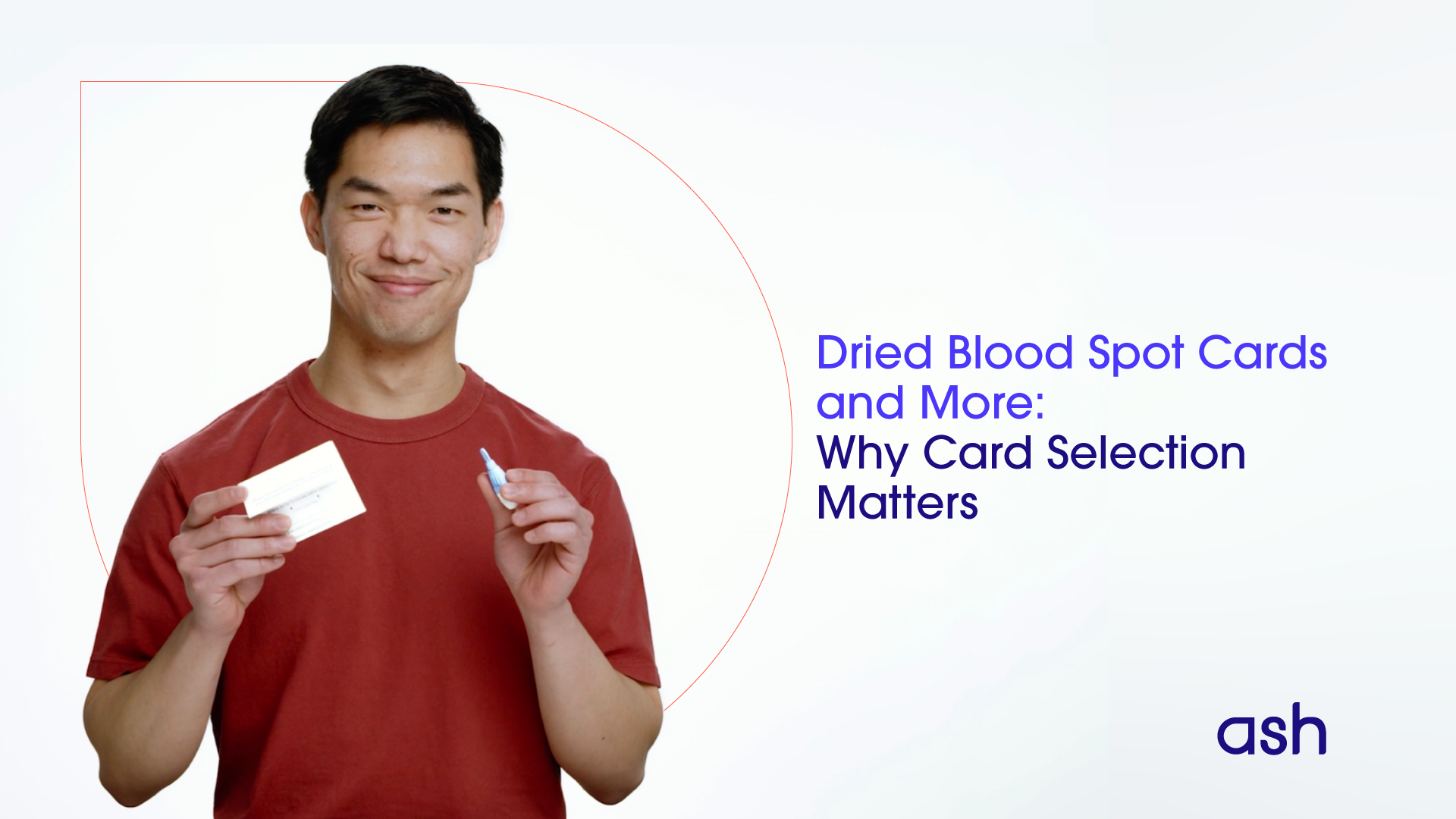
What are dried sampling technologies? Dried Blood Spot (DBS) collection involves applying a small capillary blood sample to absorbent filter paper, where it dries and stabilizes for room-temperature transport to a lab—no refrigeration required. DUS and DSS follow the same principle for urine and saliva samples respectively.
From a patient perspective, the difference is significant.
The traditional wet blood home collection kit process includes:
This method can be effective, and the preferred method for larger samples or specific biomarkers. It also unlocks the ability to use upper arm devices, which make it easier to collect blood.
The dried sampling process is simple:
Dried sampling technologies are engineered specifically for decentralized healthcare. This approach is specifically designed for ease of use, safety, and accessibility.
Collecting liquid samples at home can be intimidating. Filling tubes correctly, avoiding contamination, and following strict instructions can create anxiety.
Dried sampling removes these challenges:
For patients, this translates into confidence and peace of mind.
Handling liquid blood, urine, or saliva can feel uncomfortable for many users.
With DBS, DUS, and DSS:
This is a major advantage for first-time users and at-home testing adoption.
One of the most common concerns with liquid sample kits is leakage during transport.
Dried samples eliminate this risk:
Patients can send their samples with greater confidence and less hassle.
Liquid samples need to be processed quickly unless they are kept refrigerated or frozen. They often require refrigeration, stabilizing agents, and fast shipping to avoid degradation. This can create pressure on patients to act quickly and follow complex instructions.
In contrast, dried samples:
This flexibility is one of the biggest drivers of patient satisfaction and compliance.
From a safety standpoint, dried sampling offers clear benefits.
Compared to liquid samples:
This is particularly important for families, elderly patients, and non-clinical settings.
As demand for remote health testing, telehealth integration, and self-collection kits continues to grow, dried sampling is becoming a popular solution.
For patients, it removes friction. For providers, it enables scale. For laboratories, it ensures consistency.
Ash works with each client to understand their program goals, budget, and population to design a testing program that will yield the best results and patient experience. Ash's partner Ahlstrom and EBF provide high-performance sample cards for health plans and providers that need to offer convenient, consistent, and scalable testing programs.
Contact Ash to learn how dried sampling can be integrated into your at-home testing program.
.jpg)